
What To Know When Buying New BMX Cranks
What Cranks Work On My Bike?
When selecting new cranks, there are three sizing specifications to be aware of to be sure they are compatible with your bike. There's also a few variables to choose when making your selection. Here, we will dive in to all you need to know when selecting a crankset that is best for you and your bike.
1. Crank Arm Length
Crank arm length is measured from the center of the pedal boss to the center of the spindle boss. The standard for freestyle is somewhere between 160mm and 175mm. 175mm was the standard for a long time but shorter cranks have become much more popular in recent years. The idea behind this is having your feet a little closer together allows you to generate a higher hop. It also helps to prevent your heel from hitting the back peg (if you ride a peg on that side).
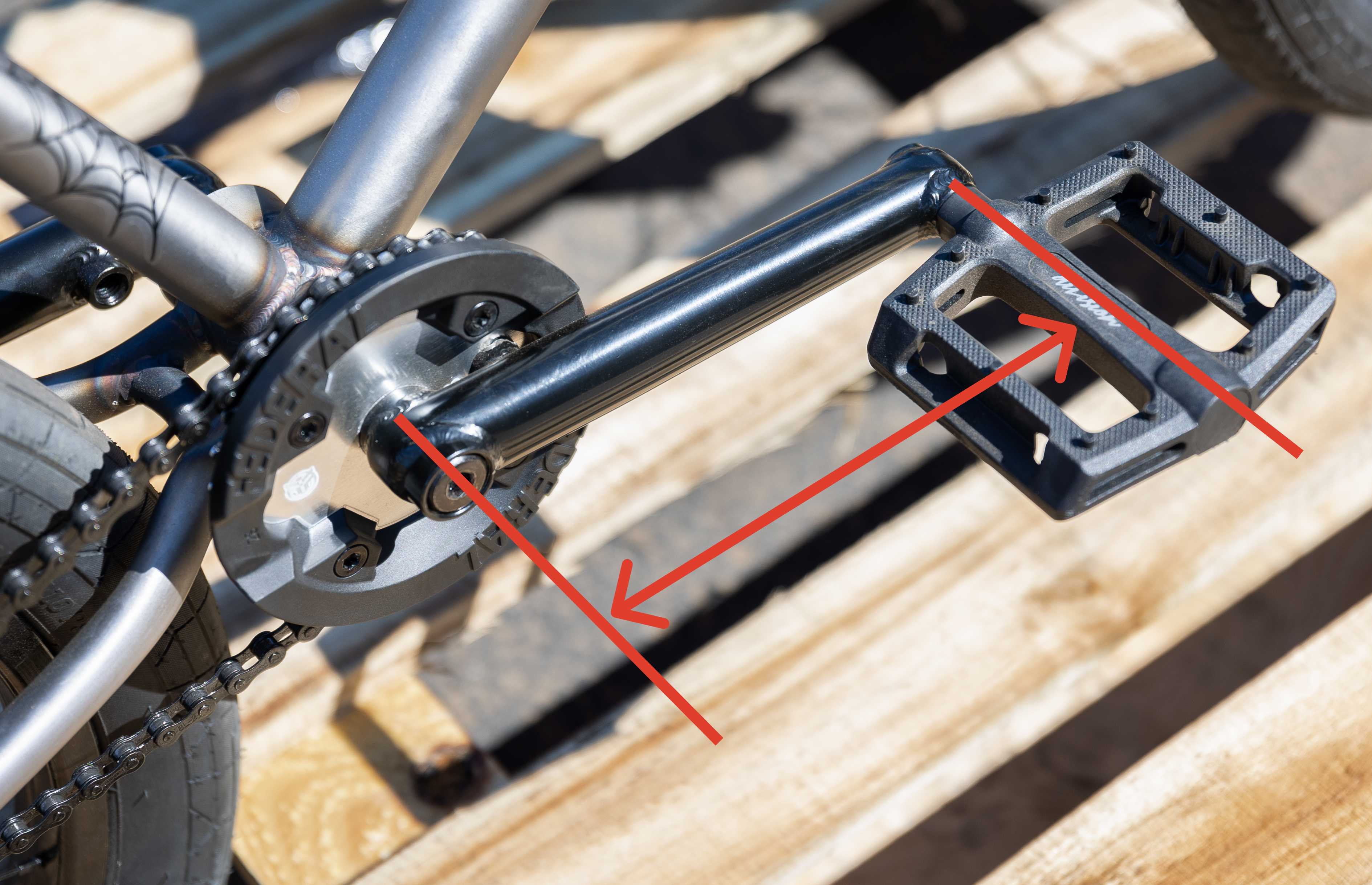
Smaller bikes will proportionally use smaller crank arms. 18" bikes often use 140mm cranks, while 12" bikes may go as low as 90mm. For these smaller wheel bikes, we recommend sticking with the same length the bike came with. Once you get on an 18" or 20" bike then you can start to test different lengths if you chose to.
2. Spindle Diameter
The spindle is what each crank arm attaches to. It goes through the frame and bottom bracket. The spindle's diameter can be one of three sizes: 19mm, 22mm, or 24mm.
Most complete bikes come with a 19mm diameter spindle. This is also very common amongst aftermarket cranks. The BMX industry experimented with a larger diameter to improve the strength of the spindle, thus comes the 22mm and 24mm options. A lot of brands found that 24mm was too big as this caused the inner diameter of the bearing to be too large. So while this did create a stronger spindle, it created a weaker bearing. The 22mm option seemed to be the perfect medium.
While 19mm is still standard and plenty strong, 22mm is a common upgrade for those riders looking for a bit of extra durability.
Why do you need to know this? While you can select any size you want, you need to make sure it works with your bottom bracket and sprocket. You can either make sure the new cranks work with your current bottom bracket, or just go ahead and get a new BB as well. (Let's be real, any time you're installing new cranks you might as well install new bearings too). It's likely that your sprocket is bored for a 24mm (15/16") spindle, which allows you to use a small adapter for a 22mm or 19mm spindle, but some are simply 19mm. You can either take your cranks & sprocket apart to figure this out before ordering, or just go ahead and get an upgraded sprocket as well.
Learn more about bottom brackets here.
Learn more about sprockets here.
3. Drive Side
Drive side refers to the side of the bike the chain is on (riders right or left). Right is standard, however, some riders ride pegs on the right side. This can cause issues with grinds and can certainly damage your chain, sprocket, and even rear hub.
These days, most aftermarket cranks are universal, meaning they have a sprocket boss on both cranks, allowing you to run your sprocket/chain on either side. Some cranks, however, are still drive-side specific. There is a specific left and right crank (look for an L or an R on each crank arm during install) so make sure you either choose a crank set that is the correct drive side or select a universal option. This will be noted somewhere in the products description on our website and we even allow you to filter the products as such when shopping.
Other Things To Consider
2 pc vs 3 pc
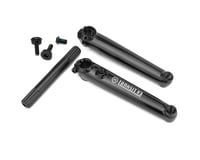
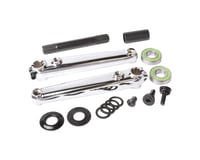
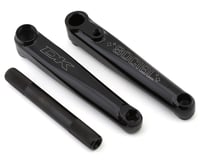
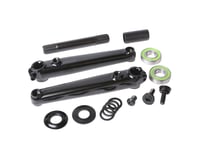
This refers to the two crank arms and the spindle. While typically these are 3 separate pieces, some crank sets have one arm fixed to the spindle as one piece, therefore making it 2 pieces in total. Either will work for you (as long as you get the correct drive side), it's just a matter of different design styles.

Splines: The First 48
The splines on a BMX crank spindle are ridges that interlock with matching grooves inside the crank arms, providing a secure, slip-free connection for power transfer. More entry-level cranks have 8 splines, whereas a bit more high-end cranks use 48 splines. Again, either will work for any bike, it's just another difference of styles you will come across when comparing crank sets.
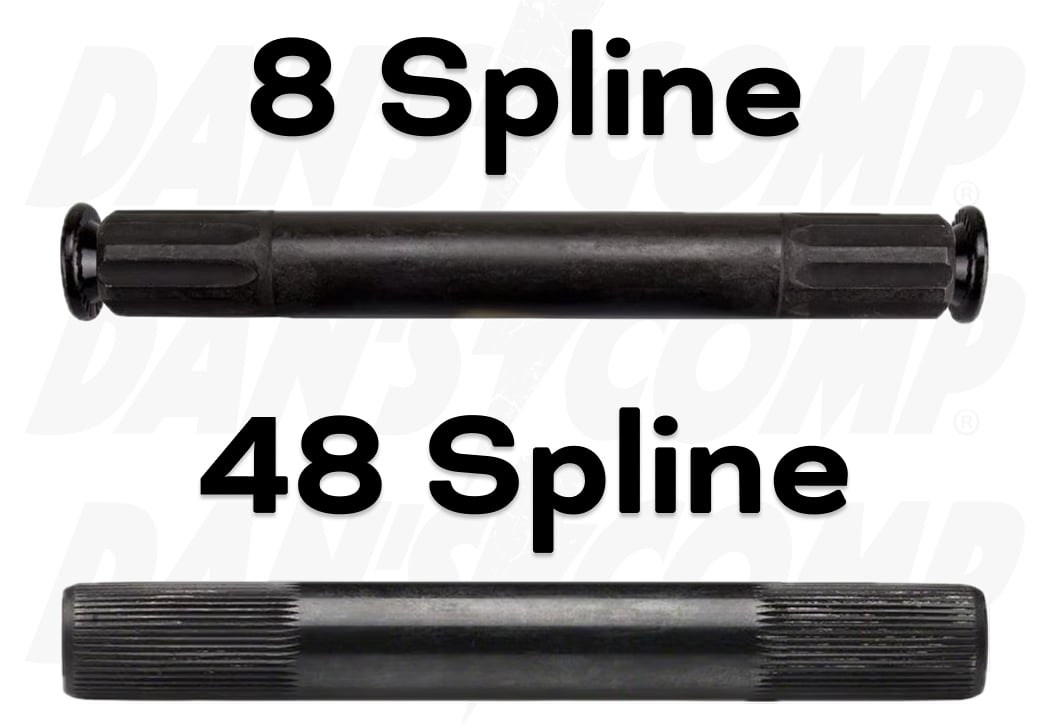
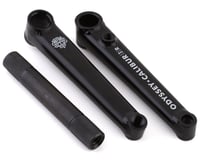
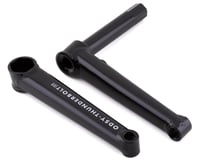
Some brands, like the Odyssey cranks shown in the 2pc V 3pc section above, use their own configuration. There's a few outliers like this out there, but most use the 8 or 48 spline system.
Material
Most freestyle cranks will be made of chromoly, however, there are a few brands that step outside of the box and use aluminum. The aluminum cranks generally hold up well and are comparable in weight, but still, chromoly is king in this category.
Where a lot of the price differences amongst cranks comes in to play is the grade of chromoly used. Lower-end cranks will often list that they are simply made of chromoly, while a higher end crank may specify 4130 chromoly (higher/stronger grade). From there, some brands use heat-treated 4130 chromoly. Heat-treated chromoly refers to 4130 chromoly steel that has undergone an additional heat-treatment process to increase its strength, hardness, and fatigue resistance compared to standard (non-heat-treated) 4130 chromoly, which is already strong but not as durable under repeated stress.
Most Popular Cranks
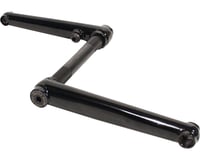
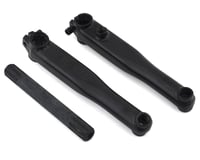
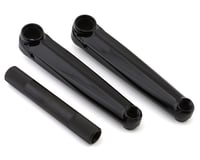
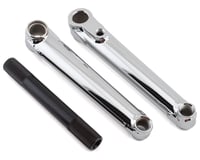

For more help, click the "Chat with an Expert" box at the bottom right of our site or visit our CONTACT US page to speak to a BMX tech.
Need more help? Click here to shoot us a message or give us a call to chat with a BMX tech.