
BMX Stem Sizes & Install
BMX Stem Sizes & Compatibility
BMX stems have two size specifications to consider when it comes to compatibility, then a third that comes down to rider preference. Here, we show you all you need to know to find a stem that fits your bike and you as a rider.
Compatibility Specs
The first to consider is the steerer tube size, which refers to the size of fork the stem fits on. For modern freestyle bikes, this is always 1-1/8", while BMX racing may be 1" or 1-/8".
The next is the handlebar clamp size. Again, freestyle keeps things simple and mainly sticks with the standard 22.2mm. Oversized 1" clamps have been experimented with, the idea being that the larger diameter adds a bit of strength. While this may be true, the tried and true 22.2mm is still the standard.
BMX racing does use multiple clamp sizes. 22.2mm is the standard here as well, however, 28.6mm and 31.8mm options are common to add stiffness to the bars, therefore you need a compatible stem.
Stem Length / Reach
Once you know the stem will work on the bike, now we get in to making sure it fits the rider. The terms 'length' and 'reach' are used interchangeably. The length refers to the length from the center of the fork steer tube to the center of the handlebar clamp area.
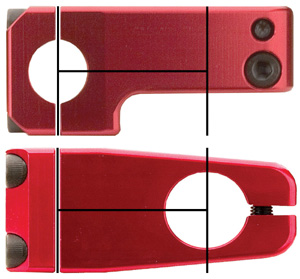
In freestyle, the length can vary drastically, but the most common lengths are usually somewhere between 45mm and 55mm. Shorter brings the bars a bit closer, great for smaller riders, while longer gives taller riders a bit more space.
In BMX racing the stem length is all over the map. Mini and micro race bikes may even go all the way down to a 0mm reach, while Pro XXXL bikes may go up to 65mm. If you're not sure, the best bet is to find what you currently ride (measure it or contact us for help) and go from there. We recommend staying the same or go up or down just a couple millimeters since very small changes are noticeable.
Front Load vs Top Load Stems
In BMX, stems come in two primary styles: front load and top load, which differ mainly in how they position the handlebars. A front load stem clamps the bars on the front of the stem body, resulting in a lower bar position that offers a more stable and race-oriented feel. In contrast, a top load stem clamps the bars on top of the stem, raising their height and giving riders a more upright and responsive riding position. While measurements play a role in this, some riders simply prefer the look of one style over the other.
Two key measurements BMX riders use when comparing stems are rise and stack height. Rise refers to the vertical distance between the center of the fork’s steerer tube and the center of the handlebar clamp, directly influencing how high the bars sit. Top load stems typically have a higher rise (around 20–35mm), while front load stems are lower (around 8–10mm). Stack height, on the other hand, is the height of the stem section that clamps onto the steerer tube; it affects how much steerer tube is inserted into the stem and is important for headset fit and fork length compatibility. Together, these factors play a crucial role in dialing in a rider’s preferred bar height and bike feel.

How To Find The Right Stem
When shopping stems on the Dan's Comp website, you can browse all stems or narrow down the category to only front loads or top loads.
Length/Rise is an option you can filter. Many stems come with more than one reach option, meaning you can find a stem you like then select which reach you want. Rise and stack heights generally are not an option, it just is what it is. If you are looking for a particular rise or stack height, you will look at this to compare stems. Once you find the one you like, then you select the reach option you like best.
I know we just through a lot at you. If you have questions or need help, feel free to reach out to our customer service team here or the "Chat with an Expert" button at the bottom of your screen. If you need help installing your new stem, check out our video below.