
BMX Rear Hub Types
Rear Hubs
The rear hub is one of the more technical and complex parts of a BMX bike. There are several different styles, each with several components. Here, we're going to take a deep dive in to each type of BMX rear hub and explain how they work, what they're used for, and the components involved.
Broadly speaking, there are three types of rear BMX hubs: cassette, freecoaster, and freewheel.
Cassettes
Cassette hubs are the most common hub type in both freestyle and racing. A cassette hub works by using a driver with a spring-and-pawl mechanism inside the hub shell. When you pedal forward, the pawls in the driver engage with the teeth in the hub shell, driving the rear wheel. This allows for a direct and immediate transfer of power, making it responsive and efficient. When you stop pedaling, the pawls disengage, allowing the wheel to spin freely while the pedals remain stationary, enabling coasting.

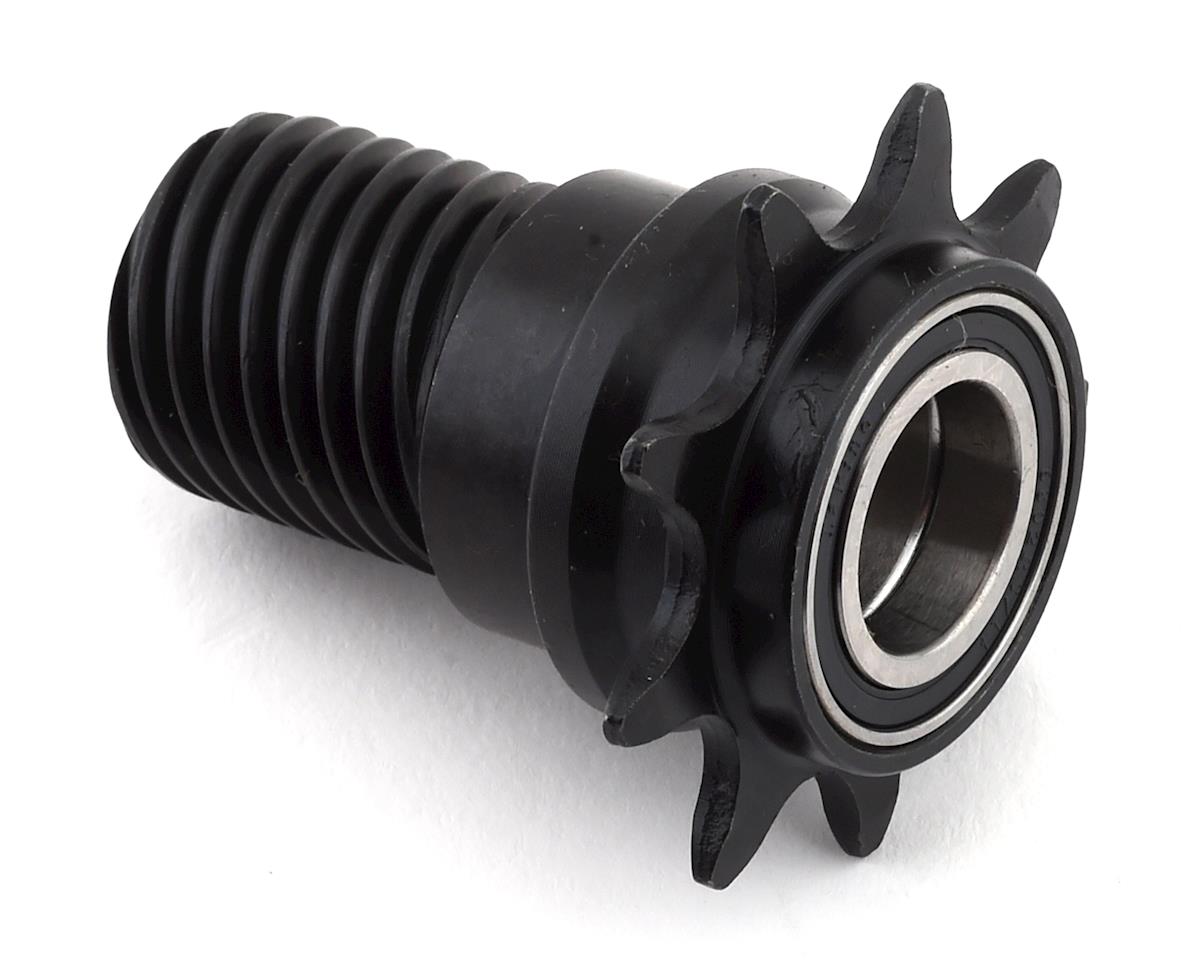
While there are a few different designs and changes from brand to brand, the basic idea of a cassette remains the same. The biggest difference is between one-piece and two-piece drivers. One-piece drivers is what is used on freestyle bikes. This is where the driver and the rear sprocket (driven by the chain) is one-piece. This is generally limited to somewhere between an 8 to an 11 tooth rear sprocket, which is in the realm of common freestyle gear ratios (9 tooth being the most common).
Race bikes, however, use a two-piece driver. This is where the cog slides on to the driver and gets tightened down. This allows racers to easily adjust their gear ratio depending on the track they are riding. This also allows for larger rear sprockets, generally being in the ballpark of 16 teeth.

The main benefit of a cassette hub is the nearly instant engagement of forward momentum once you start pedaling. This increases with higher-end components that offer more points of engagement. This is a clear benefit and the only true drive type in BMX racing. In freestyle, however, there's more to it. Freestyle riders often ride backwards (riding fakie). A cassette hub requires the rider to back pedal to avoid the driver from enganging to allow them to ride backwards. While this works and many riders still prefer this riding style, there is another option; the freecoaster.
Freecoasters
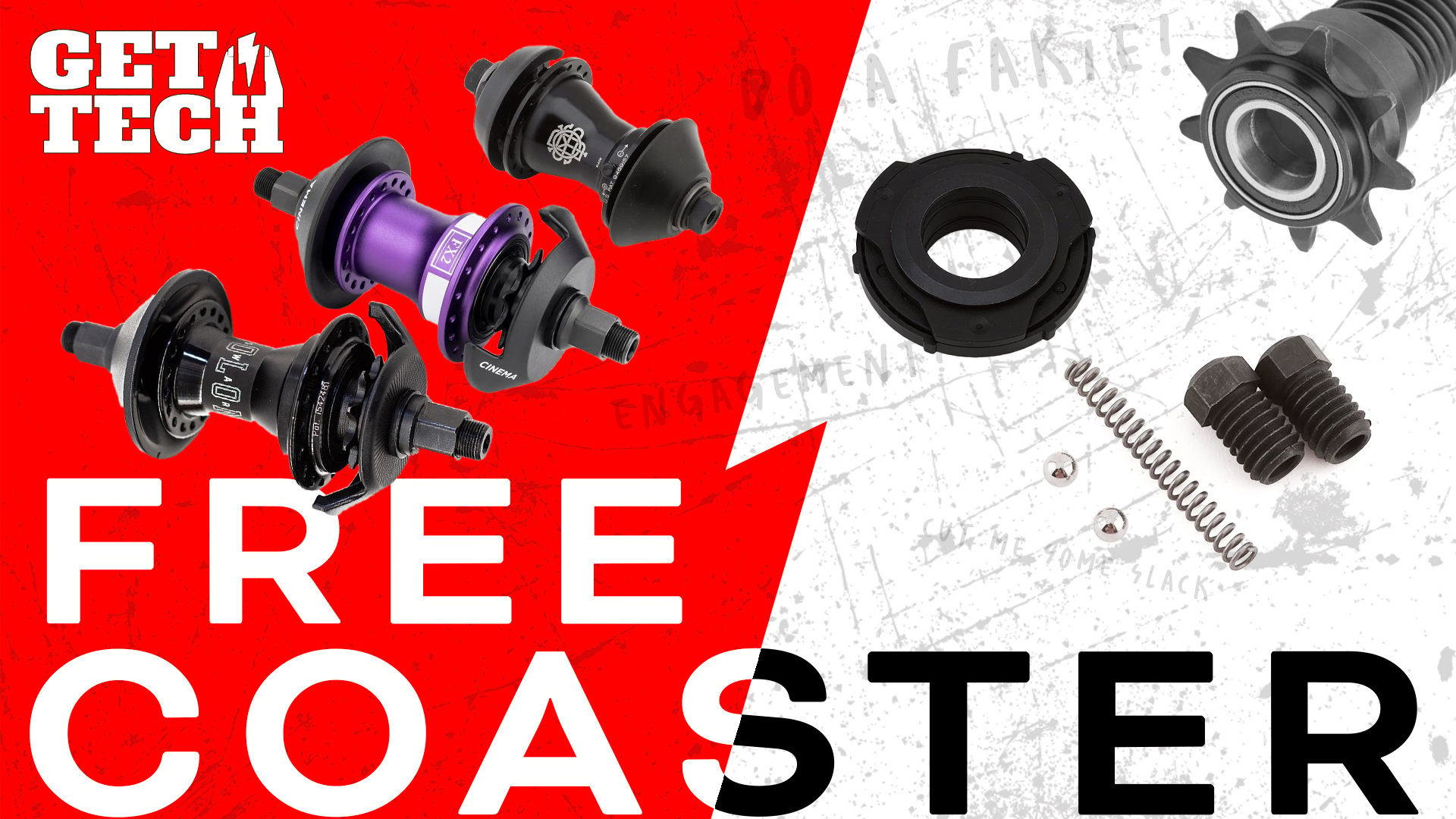
BMX freecoaster hubs have developed significantly over the years, catering to riders who need backward-rolling (or fakie) abilities without pedal engagement. Here's a breakdown of the main types and how each functions:
1. Clutch-Based Freecoasters
Mechanism: Clutch-based freecoasters use a clutch system that moves along an internal screw (or helical grooves) when you pedal forward or backward. The clutch engages the driver, allowing pedal power to reach the wheel. When you stop pedaling, the clutch disengages, allowing the wheel to rotate backward without turning the pedals.
Pros: Durable and proven in the BMX industry, they provide a clean "disengaged" feeling when rolling backward.
Cons: These hubs tend to be heavier, and over time the clutch can wear out, requiring maintenance. There’s also a common “slack” in pedal engagement when you start pedaling forward after coasting.
2. Planetary Freecoasters
Mechanism: Planetary freecoasters use a planetary gear system to achieve disengagement. Inside the hub, a series of small gears engage and disengage the driver through precise gear manipulation. When pedaling backward, the hub’s planetary gears move the driver in a way that allows freecoasting without engaging the pedals.
Pros: Planetary freecoasters often have minimal slack, which can make for smoother and quicker engagement. They are typically lighter than clutch-based hubs and may require less maintenance.
Cons: This technology is newer, and planetary hubs can sometimes be more expensive than traditional freecoasters. Additionally, because they use precise gears, they may be less forgiving to hard impacts.
3. Switchable Freecoaster-Cassette Hubs
Mechanism: These hubs allow riders to switch between a freecoaster and a cassette mode, usually by adjusting or replacing an internal component, often with a spacer or similar part. In cassette mode, the hub functions as a typical cassette, with quick engagement. In freecoaster mode, it disengages similarly to a clutch-based freecoaster.
Pros: They offer flexibility, so you can switch based on riding style or preference. You get the best of both worlds; quick engagement in cassette mode and the option to freecoast.
Cons: Switching modes may require partial disassembly, which isn’t always convenient. This also means more complex internals and potentially more maintenance.
4. Magnet-Based Freecoasters
Mechanism: Some hubs use magnets instead of springs to engage and disengage the driver. The magnets provide consistent engagement with less mechanical wear and are less likely to weaken over time.
Pros: Magnet-based hubs have low maintenance needs and typically offer a smooth engagement. They are also quieter than traditional clutch hubs and are switchable from freecoaster to cassette.
Cons: Magnetic hubs are still relatively rare and can be costly. Riders looking for a reliable traditional feel may find the engagement slightly different.
Each hub type offers unique advantages for different BMX styles, from street riding to technical tricks. Many riders choose based on factors like slack tolerance, weight, and maintenance preferences. Learn more about freecoasters and check out our videos to see them in action HERE.
Freewheels
A freewheel is a seperate drive mechanism that is threaded on to the shell of a freewheel hub. Freewheels where the standard back in the day but aren't too common today. They can be found on some entry-level freestyle bikes, big wheel BMX bikes (26" & 29" Bike Life bikes), and old school-themed bikes.

FAQ
When would I choose left-hand drive over right-hand drive?
Running left-hand drive moves the sprockets and chain to the left side of the bike. This is good if you use your right pegs the majority of the time and you feel that your drive train is in the way. If you use your left pegs most of the time it may be best to stay with right-hand drive.
What does the gauge of a spoke refer to?
The gauge of a spoke refers to the diameter of the spoke. The smaller the gauge the larger the diameter will be. For instance a 14g spoke is 2.0mm in diameter and a 15g spoke is 1.8mm in diameter.
What is the difference between a straight gauge spoke and a double-butted spoke?
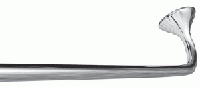
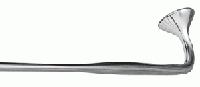
A straight gauge spoke is one diameter all the way down the spoke. A double-butted spoke changes diameter twice. Usually, a double-butted spoke will start out at the head of the spoke as 14g, change about 20mm down to 15g and change back to 14g about 20mm before the threads. Basically, it is 14g on the ends and 15g through the center.
Straight Gauge Spoke
Double Butted Spoke
What are the differences between brass nipples and alloy nipples?
Brass nipples are known to be very strong, come in two colors, black and silver, and weigh more than alloy nipples. Alloy nipples are not as strong but they weigh less than brass and they come in a variety of colors.
How do I know what sealed bearings I need for my sealed hub?
If you remove the bearing from the hub there should be little numbers on the seal of the bearing. These numbers are the bearing numbers. All you have to do is write these numbers down and give us a call, then we will match your bearing numbers up with a bearing that we have in stock. If you have any questions please give us a call.
What does the number 1.75 on rims mean?
1.75 on rims stands for the smallest size tire that will fit on that rim. This does not mean that the rim will measure 1.75" wide. A 1.75 rim will not accept a tire that is a 1.5 although a 1.5 rim will accept a tire that is 1.75.
Will a 20 x 1-1/8" rim work on my 20" bike?
No. A 20 x 1-1/8" rim is bigger in diameter than a regular 20 x 1.75" rim. A 20 x 1-1/8"rim was designed for mini race bikes.