
BMX Brake Types & FAQ
How do I install my brakes?
To see detailed instructions on brake installation, clock the links below.
What type of brakes do I need for my bike?
The two most common types of brake in the BMX world are U-brakes (990) and V-brakes (linear pull). As a general rule, freestyle bikes use U-brakes while race bikes use V-brakes. These brake styles cannot be used interchangeably.
There are exceptions to this. Caliper brakes are sometimes found on either lower end freestyle bikes or freestyle bikes that are designed to be brakeless. These bikes legally must include a brake, so the caliper is the most inexpensive option to include and requires the lowest-profile frame mount to keep a clean brakeless look. Some larger 26” and 29” freestyle bikes use a V-brake to better accommodate the larger wheel. If you’re unsure of what your bike requires, just look for the brake mounts. V-brakes are mounted on top of the seat stays while U-brakes are located on the bottom of the seat stays or on the top of the chain stays
Disc brakes have also entered the BMX world but are almost exclusively found on race bikes. This is a whole other chapter but we just wanted to make note of them here.


Which removable brake mounts work for my frame?
Riding without brakes is commonplace these days. While brake mounts were traditionally welded to the frames, many companies now either make them removable or do not have brake mounts at all so that the frame has a clean look.
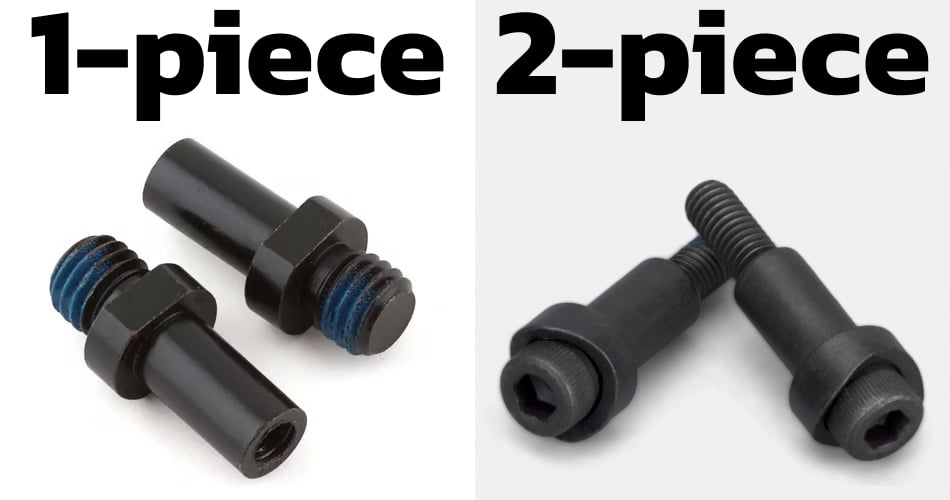
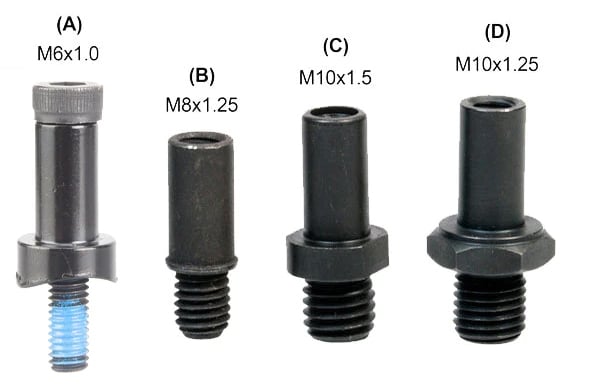
If your frame utilizes removable brake mounts, you need to be sure you are using the correct type. In general, there are two types of removable mounts; one-piece where the mount itself is threaded, or two-piece where a bolt goes through the mount and threads into the frame. Within these types, multiple thread pitch sizes have been used over the years, so be sure to find the right kind. We have a chart below of what is commonly used for each brand, but this is not a guarantee as brands have changed what they use over the years. Shop all here.
| Frame | Mount Style | Thread Pitch |
|---|---|---|
| Colony | 1-piece | 8 x 1.25mm |
| Cult | 2-piece | 6 x 1mm |
| Fiction | 1-piece | 10 x 1.25mm |
| Fiend | 1-piece | 8 x 1.25mm |
| Fiend (Flush Mount) | 1-piece | 8 x 1.25mm |
| Kink | 2-piece | 6 x 1mm |
| S&M | 2-piece | 6 x 1mm |
| Stolen | 1-piece | 10 x 1.25mm |
| Subrosa | 2-piece | 6 x 1mm |
| Sunday | 1-piece | 8 x 1.25mm |
| WTP (2013-2018) | 1-piece | 8 x 1.25mm |
| WTP (2019+) | 2-piece | 8 x 1.25mm |
What are the different types of brake cables?
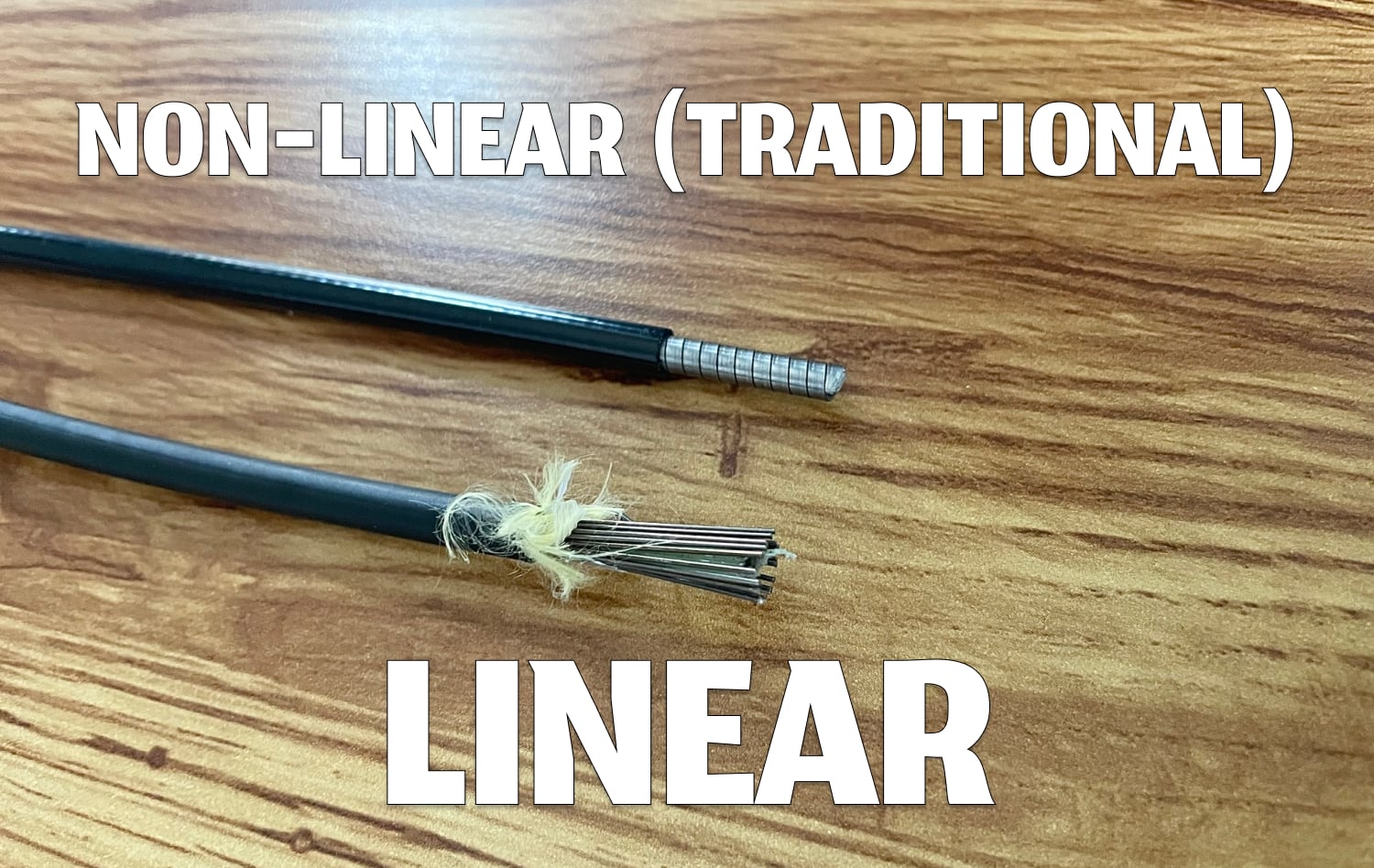
There are two main types of brake cables: linear and non-linear. This refers to the cable housing, not the actual inner cable itself. While some inner cables use special coatings with the idea of making for a smoother pull, they are generally all the same.
A traditional or non-linear cable is made from a flat coiled wire. The advantage of this is that it is accepting to being bent without binding up the inner cable. This is great if the cable needs to be routed with a tight bend, like for a front brake. The downside to this is that the coils may have a bit of compression, causing the brakes to feel a bit spongy.
Linear cables are made from several straight, small steel cables. This provides a more responsive, smooth, and/or consistent feel. While these cables can still be bent, if it is too tight of a bend it can cause a lot of friction for the cable, causing a tougher or less smooth pull.
What is a gyro / detangler?
A gyro system allows you to spin your handlebars around without your brake cable getting bound up. This is great for freestyle riders that want to do a lot of bar spins and/or tailwhips but still want to run brakes. We take a deep dive on how to install a gyro system here.
What type of brake pads should I use?
Brake pads utilize different types of compounds aimed at desired stopping power, rim type, and even riding conditions. In the freestyle world, it ultimately comes down to clear or colored pads. Clear pads generally are softer and therefore provide the greatest stopping power. This can cause a lot of brake noise, so some riders prefer to stick with a colored brake pad because they are more quiet, sometimes more consistent and still provide plenty of power if set up correctly.
For race bikes, the main thing to look for is what works with your rim material. Carbon fiber rims require a specific type of compound while traditional alloy rims can accept a variety of compounds, again, depending on how soft of a pad you want.
How can I make my brakes work better?
There are several different ways to improve braking performance. The first is to make sure your brakes are adjusted properly, and the brake pads are making full contact with the rim. You can also increase braking performance by running a softer and larger brake pad. Keep in mind that chrome rims offer better braking performance than silver or painted rims. Clear pads generally work best, however, CLEAR PADS SHOULD NOT BE USED WITH CHROME RIMS. Many manufacturers have found that this combination often leads to the rubber being ripped off the brake pad post and is not covered under any type of warranty.
For more pro tips on how to set your brakes up properly and get them working top-notch, check out our video.